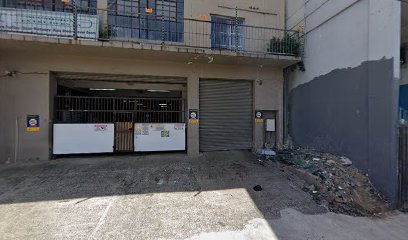
ALUMINIUM EXTRUDERS S.A. is a Aluminum welder establishment in Durban, KwaZulu-Natal, South Africa
Aluminium Extruders S.A. — Aluminium Extrusion and Finishing Services Summary
Aluminium Extruders S.A. is presented as a South African entreprise focused on aluminium extrusion and related finishing services. The company describes itself as a proudly South African operation with aims to grow into a world-class competitor within the aluminium extrusion market. The information assembled here draws on the company’s public pages, including process descriptions, material data, and finishing capabilities, complemented by visitor feedback from public reviews where available.
The core offering centres on the production and processing of aluminium extrusions. The business outlines its capacity to supply extrusions in various alloy families, noting commonly used alloys such as 6063, 6061, 6005 and 6082. A key emphasis is placed on the ability to tailor alloy choice to application—ranging from architectural and decorative profiles to structural and transport components. The 6063 alloy is highlighted for architectural and window-related extrusions due to its good weldability and corrosion resistance, while 6005 and 6082 are noted for structural and heavier-duty applications. This aligns with the company’s orientation towards diverse industrial and building sectors that rely on precisely engineered profiles.
From billet to finished extrusion, the process is described in a sequence of interlinked stages. Billet is imported from abroad (including 6063, 6061 and 6005 alloys) and subjected to a test certificate regime prior to delivery. The billet is then cut to length to suit the press size and the profile being produced. The press operation is explained as a deformation process where pre-heated billet is forced through a die to form the desired cross-section, followed by run-out, cooling and straightening steps. The company notes a substantial monthly production capacity, with extrusion output described as exceeding two hundred tonnes per month, illustrating a significant scale for stockists and direct customers with reservations of dies. The description of the press operation underscores the importance of precise temperature control, shaping, cooling, and length management in delivering consistent extrusions.
Post-extrusion workflows include stretching and ageing to achieve the required mechanical properties. The stretching step realigns and straightens the extruded lengths, with careful control to avoid dimensional distortion. Ageing occurs after initial straightening, with baskets moved through controlled thermal processing before cooling and handover to finishing departments. The finishing path includes options for surface treatment, notably anodising and powder coating, indicating a complete conversion from as-extruded material to a protected, aesthetically finished product. The finishing routes are described as follows:
- Anodising: The site explains the rationale for anodic oxide films as protective barriers against corrosion, with a focus on increasing surface hardness and corrosion resistance. The process description includes immersion in chemical baths, sealing of porous oxide layers, and options to colour the finish. The company mentions administrative quality controls such as weekly chemical sampling by a third-party laboratory and adherence to thickness recommendations for inland and coastal environments.
- Powder coating: The powder coating workflow is detailed, from pretreatment etching to remove the natural oxide layer, chromate preparation, and the application of polyester powders (supplied by a major manufacturer). The finishing sequence culminates in curing within carefully controlled oven temperatures, followed by cooling and quality checks for colour consistency before packing and storage.
In addition to the described processes, the company indicates a broader product range geared towards architectural systems—window systems, sliding windows, shopfronts, foldaway designs, x-sliders and louvre configurations. This suggests a focus on architectural aluminium extrusion as well as miscellaneous metal components, with profiles and components designed to meet specifications from customer dies or stock items.
Customer experience appears to be mixed in external feedback. Public reviews indicate concerns around service quality and communications in some instances, highlighting issues such as quote handling, payment security, and responsiveness. While some reviewers report positive experiences with product range and competitive pricing, their narratives also reflect perceived shortcomings in customer service and engagement. Prospective clients may wish to consider these accounts in evaluating the overall reliability of service encounters alongside technical capability.
Practical tips for customers include reviewing alloy options early in project planning to ensure the selected grade aligns with the intended use, particularly for architectural versus structural applications. When ordering, providing specific die reservations or profile specifications can help streamline processing. For finishing, clarity about desired coating colour and thickness (particularly in coastal versus inland contexts) will assist in achieving the intended long-term performance. If considering anodising or powder coating, it may be prudent to request sampling or colour swatches to assure consistency across batches and long-term colour stability.
Geographically, the content positions Aluminium Extruders S.A. as a South African extrusion supplier with capabilities to serve customers via stockists and direct orders. The publicly available information does not specify operational hours or precise local locations within KwaZulu-Natal, but the category label suggests proximity to the Durban area and the broader regional service footprint. The company’s published materials emphasise a full value chain from billet to finished finishing options, with a clear emphasis on process control and product—rather than marketing claims—driven by technical data and process sequences.
Durban
KwaZulu-Natal
South Africa
Sorry, no records were found. Please adjust your search criteria and try again.
Sorry, unable to load the Maps API.
Aluminium Welder Services in Durban, KwaZulu-Natal
Durban, a coastal city in KwaZulu-Natal, presents a dynamic landscape for aluminium welding services. Local workshops and mobile teams frequently cater to construction, manufacturing, marine, and automotive sectors. The emphasis is on high-quality welds, durability, and practical solutions that withstand Durban’s climate and industrial demands. Clients can expect technicians who understand the specifics of aluminium alloy types, appropriate joint designs, and the need for meticulous preparation and post-weld finishing.
Typical project scopes in this region cover both repairs and fabrications. Aluminium welders in Durban commonly handle structural fabrications for small- to medium-sized frames, brackets, and supports used in buildings and facilities. They also work onusten pieces such as aluminium tanks, chutes, and custom enclosures. Marine and boatyard work is notable, with services ranging from repair of hull plating and decking to fabricating replacement parts for dinghies, yachts, and support vessels. In the commercial sector, aluminium welders may contribute to shop-fitouts, display fixtures, and lightweight modular systems that benefit from corrosion resistance and ease of maintenance.
Welding methods routinely employed include fusion techniques suitable for aluminium, with TIG (Tungsten Inert Gas) and MIG (Metal Inert Gas) welding forming the core of most operations. Assisted welding approaches or composite processes may be used for thicker sections or where specific strength requirements are necessary. Preparation is emphasised: surfaces are cleaned to remove oxide layers and contaminants, appropriate fixturing ensures alignment, and heat input is controlled to minimise warping and distortion. Finalise finishing often involves brushing or light mechanical finishing to achieve the desired appearance and corrosion resistance.
Customers should anticipate a collaborative process that begins with an on-site assessment or a shop visit. A technician will typically evaluate the project’s scope, inspect material thickness and alloy identification, and discuss loading, service conditions, and environmental exposure. From there, an estimated timeline is provided, along with any recommended design modifications to improve weld quality or ease of fabrication. Throughout the engagement, safety considerations are prioritised, including the handling of hot components, appropriate PPE, and secure containment of dust and debris.
- Structural aluminium welding and fabrication for frames, supports, and architectural features
- Marine and boatyard welding, including hull, deck, and fittings repairs or replacements
- Repair welding of cracks, dents, or worn sections in aluminium components
- Custom fabrications such as brackets, housings, enclosures, and light-weight assemblies
- Replacement parts manufacture or on-site modification for vehicles, trailers, and equipment
- Finishing and inspection services to ensure corrosion resistance and structural integrity
Practical considerations in Durban include sensitivity to coastal air and humidity, which can influence corrosion resistance and coating compatibility. Welders in this area often advise on protective coatings or anodising where appropriate, and may coordinate with paint or powder-coating specialists to achieve a durable finish. Lead times vary with workshop workload, material availability, and the complexity of the project. For customers planning repairs or installations, allowing sufficient time for accurate measurement, alignment, and quality testing helps ensure long-term reliability. Budget considerations typically reflect material costs, labour intensity, and the level of post-weld finishing required to meet cosmetic and functional expectations.
Overall, aluminium welding services in Durban aim to deliver robust, corrosion-resistant joints and components suited to local conditions. The best engagements arise from clear initial assessments, transparent quotations, and adherence to established safety and quality practices. By balancing technical proficiency with practical logistics, these services support a wide range of industries across KwaZulu-Natal, contributing to dependable metalwork that stands up to Durban’s climate and enterprise demands.